Underexcitation
(ANSI 40):
Power of a synchronous generator is P
= 3 * (U * E/X) * sin d
(U : mains voltage, E : Gen voltage ,
X : synchronous reactance , d :
Polradwinkel). E is (non-linear) linked to the excitation current, so
it is obvious, that loss of excitation will reduce power and torque
of the generator (which may cause loss of synchronism!):
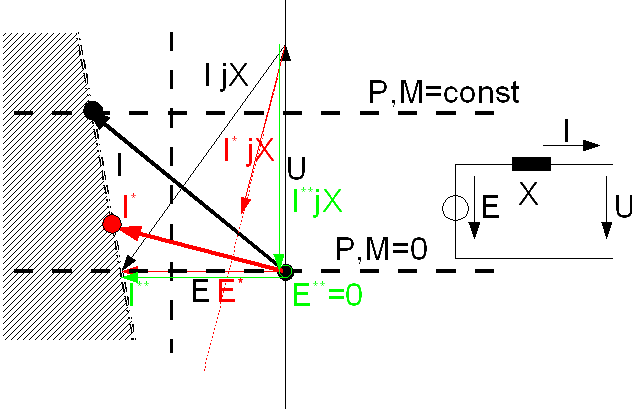
Maximum
power (and torque) will be achieved with d=90°
=> P = 3 * (U * E/X) . The diagram shows three cases with U and
E perpendicular to each other (means maximum torque): With a certain
excitation (voltage E) the maximum power (or torque) achievable is
limited, the hatched zone beyond the dotted line is not accessible.
ANSI
40 („Underexcitation“) checks, whether the generator
consumes reactive power beyond a certain level (e.g. current pointer
left from the vertical dotted line!).